Sacred Architecture
Magnificent works of sacred architecture such as Chartres cathedral and the Taj Mahal cast a spell on all those who enter their sacred space. In virtually every civilization in human history, certain buildings, monuments, temples, cathedrals and mosques have been constructed to embody the divine and sacred qualities of the universe in physical form. These beacons of spiritual energy call to the human soul to return to its original source of unity and wholeness. The books in this section trace the history of this creative human impulse from early prehistoric cultures to contemporary times.
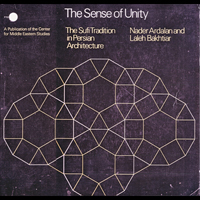
The Sense of Unity:
The Sufi Tradition in Persian Architecture
Nader Ardalon and Laleh Bakhtiar
University of Chicago Press (1973)
The book examines the beauty and symbolism of Persian architecture from a Sufi perspective, showing how fundamental principles of Sufism, such as ‘unity in multiplicity,’ can be symbolically expressed through works of art and architecture.
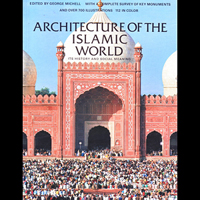
Architecture of
the Islamic World
George Mitchell
Thames and Hudson (1978)
Leading experts in the field of Islamic architecture provide a comprehensive survey of the principles, design, rich colours and profuse ornaments of the key buildings of the Islamic world. The text is complemented by over 750 photographs, drawings and plans.
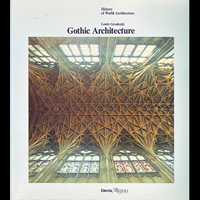
Gothic Architecture
Louis Grodecki
Rizzali (1978)
The magnificent cathedrals and buildings of the Gothic period dominated European architecture for over 400 years. Diagrams, floor plans and reconstructions of some of the most significant buildings and churches are among the 300 illustrations accompanying the text.
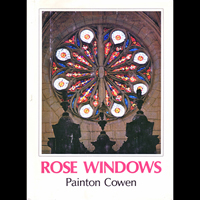
Rose Windows
Painton Cowen
Chronicle Books (1979)
One of the central features of the great Gothic cathedrals of Europe are the huge, circular rose windows, radiating brilliant colours that change with the light outside. Acting as a mandala and healing image, the rose window is an earthly symbol of the enlightenment of the human spirit.
Chartres:
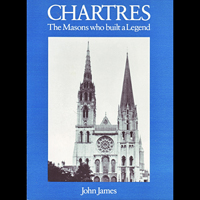
The Masons who built a Legend
John James
Routledge & Kegan Paul (1985)
Chartres cathedral is considered one of the greatest architectural creations of the medieval era, yet virtually nothing is known of the men who designed and built this church. The author explores the history, design and construction of Chartres through his insightful ‘reading of the stones.’
Moorish Architecture
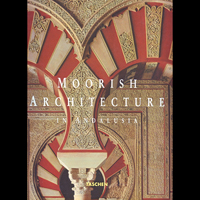
in Andalusia
Marianne Barrucand and Achim Bedriorz
Taschen (1992)
The invasion of Spain by Islamic armies in 710 A.D. heralded an 800-year period of a shared cultural environment between Muslims, Christians and Jews that proved the basis for great architectural achievements, such as the Alhambra in Granada and the Great Mosque of Cordova.
Sacred Architecture
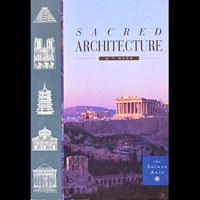
A.T. Mann
Element Books (1993)
The language of the sacred can be found in buildings as diverse as the Parthenon, Hopi initiation lodges, Stonehenge, the Temple at Luxor and Islamic mosques. A.T. Mann explains how such sacred images depict cosmic principles which still have relevance in architecture today.
Spiritual
Path, Sacred Place
Thomas Barrie
Shambhala (1996)
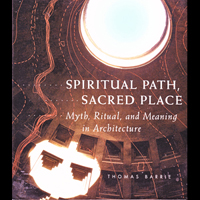
Sacred architecture expresses some of the most fundamental aspects of human existence. The book is an in-depth survey of sacred sites and buildings around the world, from ancient Egyptian temples to contemporary religious structures.
The Shape
of the Holy
Oleg Grabar
Princeton University Press (1996)
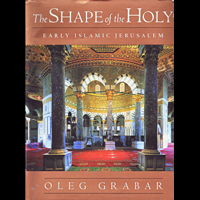
The Shape of the Holy chronicles the story of Jerusalem’s Dome of the Rock, which houses the rock from which the Prophet Mohammed is believed to have ascended to heaven. Through an innovative computer modeling program, the author presents reconstructions of historical views of early Jerusalem.
Sacred Architecture
Caroline Humphrey and Piers Vitebsky
Little, Brown and Company (1997)
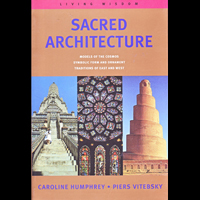
Sacred architecture is deeply symbolic, reflecting an awareness of our relationship with the divine. The book captures the power and beauty of a wide range of temples, shrines and other sacred buildings, from pyramids and medieval cathedrals to tribal architecture of indigenous cultures.
Splendors
of Islam
Dominique Clévenot
Mendome Press (2000)
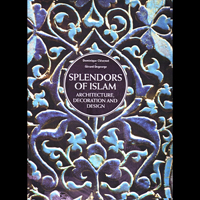
This wonderfully illustrated book explores the architecture, decoration and design of mosques and monuments of the Islamic civilization. The decorative arts, colour combinations and building techniques of Islamic architecture are fully explored in this volume.
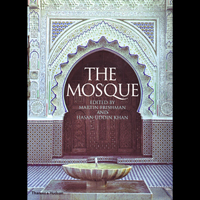
The Mosque
Martin Frishman and Hasan-Uddin Khan
Thames and Hudson (2002)
Mosques are the outward and visible symbol of Islam and can be found in all parts of the modern world. The book traces the history and development of the mosque since its origins in Arabia as well as its characteristic architectural and decorative features.
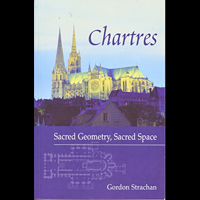
Chartres:
Sacred Geometry, Sacred Space
Gordon Strachan
Floris Books (2003)
This wonderfully illustrated book explains how Chartres cathedral is the synthesis of Christian and Islamic architecture, mysticism and the skill of medieval geometries and craftsmen.
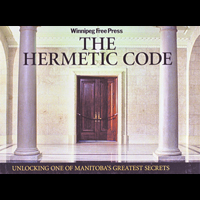
The Hermetic
Code
Carolin Vesely and Buzz Currie
Winnipeg Free Press (2007)
The Manitoba Legislative Building is the undisputed architectural gem of Winnipeg and the province, yet few people understand its secrets, symbols or significance. The book is based on original research by scholar Frank Albo and reveals its esoteric meaning and the Masonic influences on its design and construction.
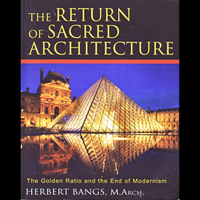
The Return
of Sacred Architecture
Herbert Bangs
Inner Traditions (2007)
Herbert Bangs contrasts the dysfunctional buildings of contemporary architecture with the great masterworks of the past which spoke to humanity’s higher nature. Based on esoteric tradition and the laws of proportion and number, sacred architecture creates structures through which human beings can harmonize with the nature of divine reality.
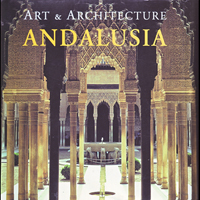
Art and Architecture
Andalusia
Brigitte Hintzen-Bohlen
H.F. Ullmann (2007)
The book is a comprehensive guide to the art and architecture, culture and history of southern Spain’s unique melting pot of Moorish, Christian and Jewish culture. It explains how the Mosque of Cordova, the Alhambra at Granada and Seville Cathedral have all cast their spell over visitors throughout the centuries.
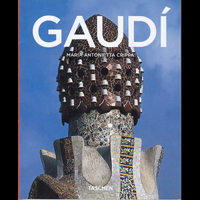
Gaudí
Maria Antonietta Crippa
Taschen (2007)
Antoni Gaudi was a Spanish Catalan architect whose highly individual and distinctive style is universally applauded as the work of a genius. He was strongly influenced by neo-Gothic and Oriental art and his impressive creations, especially the still-uncompleted Sagrada Familia cathedral in Barcelona, are masterpieces of innovative construction and spiritual vision.
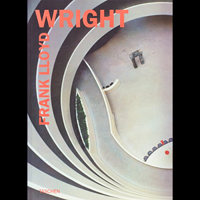
Frank Lloyd
Wright: American Master
Alan Weintraub and Kathryn Smith
Rizzali (2009)
Frank Lloyd Wright was one of the most creative and innovative architectural masters of the 20th century. The volume is an overview of his architectural achievements encompassing the entirety of his long and prolific career.
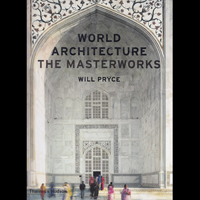
World Architecture:
The Masterworks
Will Pryce
Thames & Hudson (2011)
The beautifully illustrated book features the pre-eminent aesthetic achievements of architectural design throughout history. Masterpieces, including the great cathedrals of Europe, Islamic mosques and Buddhist temples, are presented in stunning colour and described in terms of history, design, construction and cultural influence.
Frank Lloyd
Wright Natural Design
Alan Hess
Rizzoli Publications (2012)
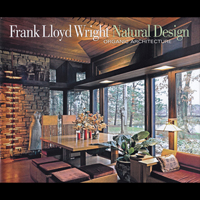
The great American architect Frank Lloyd Wright created homes and buildings which are pre-eminent examples of organic architecture. The book showcases his sensitivity to the environment, the social impact of his constructions and his practical use of space to create a powerful spiritual effect.